Feeling anxiety for no reason can be incredibly frustrating, especially when everything in your life seems perfectly fine on paper.
You wake up, make your coffee, check your phone, and suddenly there’s that familiar uncomfortable feeling. Your stomach feels unsettled, your thoughts are racing, or you have the strange sensation that you’ve forgotten something important.
Except you haven’t.
There’s no big presentation today. No argument with your partner. No obvious problem waiting for you. So why do you feel anxious?
Here’s something worth knowing: anxiety doesn’t always need an obvious trigger to show up. Sometimes the explanation has more to do with what’s happening in your body, your habits, or the stress you’ve been carrying than with anything happening in that particular moment.
And for women, hormonal changes and the mental demands of everyday life can add another layer to the picture.
So rather than telling yourself to simply relax (because we both know how helpful that advice is), let’s look at seven possible reasons you’re feeling anxious for no apparent reason—and what you can actually do about it.
1. Why Am I Feeling Anxious for No Reason?
Before exploring the possible causes, it helps to understand what anxiety actually is.
Anxiety is part of the body’s response to perceived threats and uncertainty. It’s closely connected to the systems that prepare us to respond to stressful situations, which is why anxiety can cause physical sensations such as a racing heart, muscle tension, sweating or an unsettled stomach.
According to the National Institute of Mental Health, stress is generally a response to an external situation, while anxiety can continue even when there’s no immediate threat.
In other words, your body can feel anxious even when your mind can’t identify a reason.
That doesn’t automatically mean you have an anxiety disorder. Occasional anxiety is a normal human experience. But when it becomes persistent, difficult to manage or starts interfering with everyday life, it’s worth discussing with a healthcare professional.
The interesting question isn’t always “What am I worried about?”
Sometimes it’s “What else might be contributing to how I’m feeling?”
2. 7 Possible Reasons You’re Experiencing Anxiety for No Reason
1. You’ve been carrying more stress than you realize
Not all stress comes from dramatic life events.
Sometimes it’s the accumulation of little things: work deadlines, family responsibilities, financial worries, difficult conversations, unanswered messages and the never-ending mental checklist running in the background.
You might be managing everything reasonably well, but that doesn’t mean those demands aren’t affecting you.
Stress can influence sleep, concentration, mood and physical tension. And when stress becomes persistent, you may notice anxious feelings even during moments that are supposed to be relaxing.
If you’re feeling anxious on a quiet Sunday afternoon, consider whether you’ve actually had time to recover from the previous week.
Being busy and being okay aren’t necessarily the same thing.
2. Your caffeine intake might be making things worse
We need to talk about coffee.
Not because coffee is inherently bad, but because caffeine can produce sensations that feel remarkably similar to anxiety.
Caffeine stimulates the central nervous system. In sensitive individuals, it can contribute to nervousness, restlessness, palpitations and difficulty sleeping.
The amount that affects you may be different from what affects someone else. You might also notice that caffeine feels more uncomfortable during periods of stress or poor sleep.
If you’re regularly experiencing unexplained anxiety, consider paying attention to when it happens in relation to your coffee, energy drinks or other caffeinated beverages.
You don’t necessarily need to give up your favourite morning ritual. Understanding how your body responds is a useful place to begin.
3. You’re not getting enough restorative sleep
Have you noticed how much harder everything feels after a terrible night’s sleep?
Things that wouldn’t normally bother you suddenly feel overwhelming. You’re more irritable, less patient and more likely to worry about situations you would usually handle without much difficulty.
Sleep and anxiety have a complicated, two-way relationship. Anxiety can interfere with sleep, while insufficient or disrupted sleep can make emotional regulation more difficult.
According to the CDC, most adults need at least seven hours of sleep, but sleep quality matters too.
If you regularly wake up anxious, consider whether your sleep schedule is consistent and whether you’re actually waking up feeling rested.
And remember, eight hours in bed doesn’t necessarily mean eight hours of uninterrupted sleep.
4. Your hormones could be playing a role
If you’ve ever noticed that your mood changes around your period, you already know hormones can influence how you feel.
Fluctuations associated with the menstrual cycle may contribute to changes in mood, irritability and anxiety in some women. Pregnancy, the postpartum period and perimenopause can also affect emotional wellbeing.
During perimenopause, for example, changing hormone levels may coincide with sleep disturbances, mood changes and increased anxiety.
That doesn’t mean every anxious feeling is caused by hormones. But if you notice a recurring pattern—perhaps anxiety feels worse before your period or appears alongside changes in your cycle—it’s worth paying attention.
Keeping a simple symptom journal can help you recognize patterns and give your healthcare professional more useful information.
Your symptoms deserve to be taken seriously, whether they’re related to hormones or something else.
5. You’re spending too much time in anticipation mode
Sometimes anxiety isn’t about what’s happening now. It’s about everything that might happen later.
You replay a conversation from yesterday. You imagine how tomorrow’s meeting could go wrong. You worry about disappointing someone, forgetting something or making a decision you’ll regret.
And before you know it, you’ve spent half an hour mentally preparing for situations that haven’t happened.
This is often called anticipatory anxiety, and it can make ordinary uncertainty feel exhausting.
One helpful question is: “Is there something I actually need to do about this right now?”
If there is, identify one manageable next step. If there isn’t, try redirecting your attention toward what’s happening in the present rather than continuing to rehearse every possible outcome.
You don’t have to solve tomorrow before you’re allowed to enjoy today.
6. A physical health condition or medication could be contributing
This is one reason persistent unexplained anxiety shouldn’t automatically be dismissed as stress.
Certain medical conditions, including an overactive thyroid, can produce symptoms that overlap with anxiety. Some medications and stimulants may also contribute to nervousness, palpitations or restlessness.
The National Institute of Mental Health explains that healthcare professionals may consider physical health conditions when assessing anxiety symptoms.
If anxious feelings are new, unusually intense or accompanied by other unexplained physical changes, a medical appointment is a sensible next step.
You don’t need to decide whether the cause is psychological or physical before asking for help.
7. You may be experiencing an anxiety disorder
Sometimes there isn’t a single lifestyle factor or obvious trigger that explains what you’re feeling.
Anxiety disorders can involve persistent worry, fear, restlessness or physical symptoms that are difficult to control and interfere with everyday activities.
For example, generalized anxiety disorder can involve excessive worry about multiple areas of life, even when there isn’t a clear immediate danger.
Having anxious feelings doesn’t automatically mean you have a disorder. But if anxiety is becoming a regular part of your day, professional support can help you understand what’s happening.
And importantly, effective treatments are available, including evidence-based psychotherapy such as cognitive behavioural therapy.
3. How to Calm Anxiety When You Don’t Know What’s Causing It
When anxiety appears unexpectedly, your first instinct might be to figure out exactly why you’re feeling that way.
But sometimes trying to solve the mystery immediately only gives you another thing to worry about.
Instead, start with what you can control.
If you’ve been sitting at your desk for hours, take a short break and move around. If you’ve barely eaten, make time for a proper meal. If your mind is racing, try a few minutes of slow, comfortable breathing or step outside for some fresh air.
Regular movement, adequate sleep, supportive relationships and relaxation practices can all form part of a broader approach to managing stress.
You might also benefit from creating small moments of separation between responsibilities. That could mean putting your phone away during dinner, taking a walk after work or protecting a little time in the evening when nobody needs anything from you.
What about CBD and anxiety?
CBD, or cannabidiol, has attracted scientific interest because of its interactions with several biological signalling systems involved in stress and mood, including the endocannabinoid system.
Early studies have explored whether CBD may influence anxiety-related responses. However, findings are preliminary, and larger studies are needed to establish its effectiveness and long-term safety. Health Canada’s published research summaries also highlight important gaps in research involving women.
CBD should therefore not be considered an established treatment for anxiety disorders or a substitute for professional care. It can also interact with medications.
The bigger lesson is that managing anxiety rarely comes down to one product, supplement or perfect wellness ritual. Understanding your symptoms, building supportive habits and getting appropriate care are much more useful starting points.
And please don’t turn relaxation into another task you have to accomplish perfectly.
Sometimes taking care of yourself means doing less, not finding one more thing to add to your routine.
4. When Should You Seek Help for Unexplained Anxiety?
Occasional anxiety doesn’t necessarily require treatment. But if you’re frequently feeling anxious for no reason, it’s worth asking how much it’s affecting your life.
Are you struggling to concentrate at work? Avoiding social situations? Having difficulty sleeping? Constantly anticipating something going wrong?
If anxiety feels persistent, overwhelming or difficult to manage, consider speaking with a family doctor or qualified mental-health professional.
You don’t need to arrive with a diagnosis. You can simply explain what you’ve been experiencing, how long it’s been happening and how it’s affecting your everyday life.
You might say, “I’ve been feeling anxious a lot lately, even when nothing stressful is happening. I’d like to understand why.”
That is a perfectly reasonable reason to ask for help.
And if you’re experiencing new or severe physical symptoms, such as significant chest pain or difficulty breathing, seek prompt medical assessment rather than assuming anxiety is the cause.
5. CBD for Anxiety: Exploring Its Potential Role in Your Wellness Routine
When anxiety becomes part of your everyday life, it’s natural to become curious about different ways to support your emotional wellbeing. Alongside practices like getting enough sleep, moving regularly and making time to unwind, CBD has become an increasingly discussed ingredient in the wellness world.
CBD (cannabidiol) is a naturally occurring compound found in the cannabis plant. Researchers are interested in how CBD interacts with biological signalling systems involved in mood and stress responses, including the body’s endocannabinoid system. Early clinical studies have reported promising findings about CBD and anxiety-related symptoms.
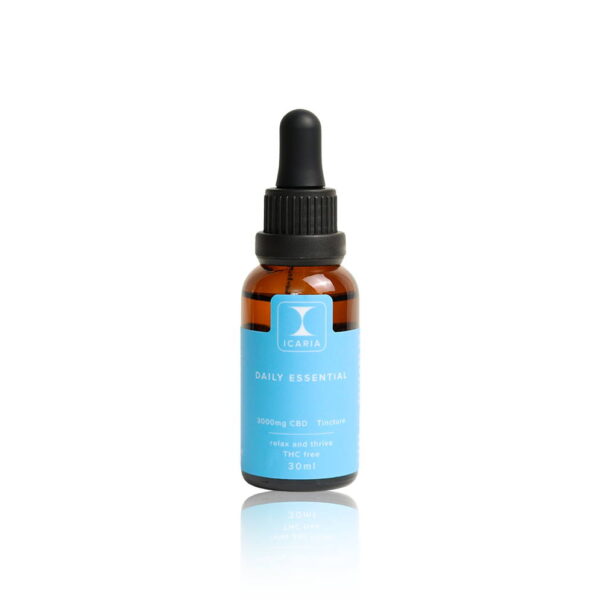
For adults exploring wellness products, our Daily Essential THC-Free CBD Oil is one example of a CBD formulation available without THC. It comes in two different concentrations so you can choose the best one for your anxiety-relief needs. Also, with no THC comes the peace of mind of knowing you are not going to get any of the “high” effects.
Conclusion: You Don’t Need a Perfect Explanation to Take Your Anxiety Seriously
Feeling anxiety for no reason can be confusing, particularly when your life looks relatively calm from the outside.
But an obvious trigger isn’t required for anxious feelings to be real.
Stress, sleep, caffeine, hormonal changes, physical health and ongoing patterns of worry can all contribute to the way you feel.
The goal isn’t to spend every day searching for something wrong with you. It’s to become more curious about what your body and mind might need.
Maybe that’s more consistent sleep. Maybe it’s fewer commitments, a conversation with someone you trust or a medical appointment you’ve been putting off.
Whatever the next step looks like, you don’t need to wait until your anxiety becomes unbearable before taking it seriously.
Your wellbeing deserves attention now—not just when everything else on your to-do list is finished.
And sometimes the most caring thing you can do for yourself is stop asking why you can’t simply push through and start asking what kind of support would actually help.
Sources: